
Something feels off
Stop Collecting What You Think You Should Want
Stop collecting business resources you never use. Learn how a minimalist parenting approach reveals why curating what truly matters beats hoarding courses, tools, and strategies.
How a parenting decision taught me the difference between keeping everything and keeping what matters

“So what keepsakes did you save from your kids’ childhoods?” my friend asked as we compared parenting approaches.
“A handful,” I told her.
Her surprise was immediate. You could see her mentally cataloging her basement full of storage bins, each one carefully labeled by year and event. She knew me well enough to know I’m a minimalist, but this still caught her off guard.
But here’s what got me thinking: How many of us are collecting what we think we should want instead of protecting what we value?
The Collection Problem Every Entrepreneur Faces
As business owners, we face this same trap daily. We collect:
- Courses we never completed
- Tools we never master
- Strategies we never implement
- Resources we never reference
The uncomfortable truth? Most of what we keep “just in case” never gets used. Just like those carefully preserved keepsakes sitting in storage, waiting for a “someday” that never comes.
We Keep What We Don’t Need
I’ve never been big on collecting things. A photo box for each child. A letter to the tooth fairy from my daughter. A newspaper clipping of my son and me. A few meaningful gifts over the years. That’s it.
However, when my friend critiqued my minimalist approach, I felt something unexpected—the familiar weight of not measuring up to some invisible standard. The quiet voice wondered if maybe everyone else knew something I didn’t.
Here’s what remained when I examined that feeling:
- Intentional choices about what mattered most
- Clear priorities instead of overwhelming options
- Energy focused on experiences, not storage
When Collecting Becomes Paralyzing
My son attended three different high schools. While other parents collected yearbooks and preserved traditional milestones, I focused on supporting his decision to find what worked for him. The stuff didn’t matter. The support did.
The same principle applies to your business as well. Those courses you haven’t taken, tools you haven’t mastered, and strategies you haven’t implemented aren’t assets—they’re anchors.
Ask yourself:
- When did I last access this resource?
- Am I keeping this because it’s valuable or because I think I should?
- Would I search for this again, or would I look for something more current?
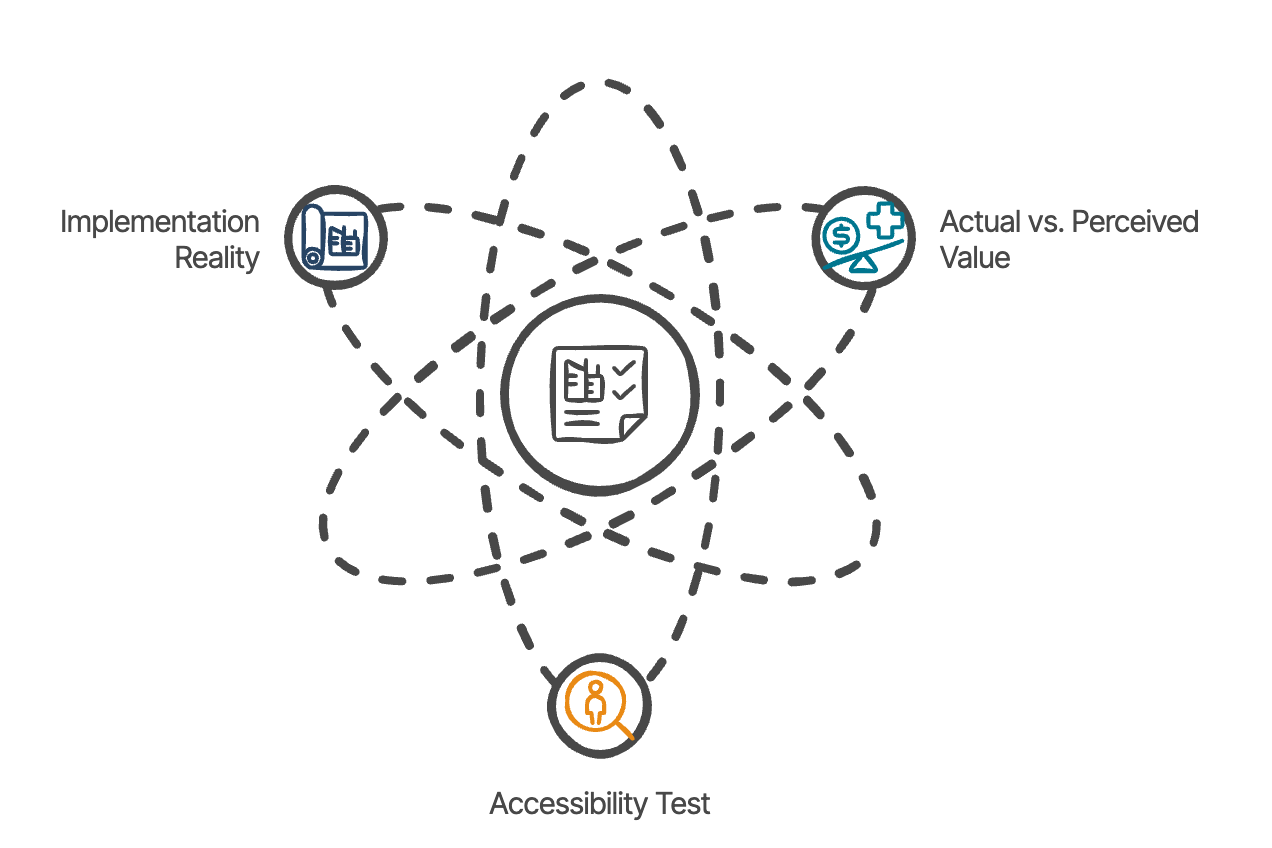
The Three-Filter System
Before keeping any business resource, run it through these filters:
Filter 1: Actual vs. Perceived Value
- Have I used this in the last 6 months?
- Does this solve a current problem I have?
- Would I pay for this again, knowing what I know now?
Filter 2: Accessibility Test
- Is this information easily found elsewhere?
- Would I search for this specifically, or Google the topic fresh?
- Am I keeping this out of convenience or necessity?
Filter 3: Implementation Reality
- Do I have a specific plan to use this?
- Have I successfully implemented similar resources in the past?
- What would I need to remove to make space for using this?
What Successful People Keep
Here’s what I’ve learned after 17 years in business: Successful people don’t have more options; they’ve better ones. They have better filters.
They keep:
- Resources they actively reference
- Tools they’ve mastered and use regularly
- Strategies they’ve tested and proven effective
- Information that directly supports current goals
They release:
- Generic advice they can find anywhere
- Outdated strategies from previous business phases
- Duplicate resources that cover the same topics
- “Someday” materials they haven’t touched in months
The Real Cost of Digital Hoarding
Every unused resource creates:
- Decision fatigue when choosing what to use
- Guilt about purchases you haven’t maximized
- Overwhelm when facing too many options
- Distraction from focusing on what works
The solution isn’t better organization—it’s better curation.
Your 30-Day Implementation Challenge
Ready to break free from the collection trap? Here’s your action plan:
Week 1: Audit Your Collection
- Export a list of all courses, tools, and resources you own
- Sort by last accessed date
- Identify patterns in what you collect vs. what you use
Week 2: Apply the Three-Filter System
- Run your top 20 resources through the filter questions
- Be ruthlessly honest about actual vs. perceived value
- Create “Keep,” “Review,” and “Release” categories
Week 3: Execute Decisions
- Cancel subscriptions you don’t actively use
- Delete or archive resources that failed the filters
- Organize your “Keep” list into an easily accessible system
Week 4: Create Prevention Rules
- Set a “30-day implementation window” for new acquisitions
- Implement a “one in, one out” policy for courses and tools
- Schedule quarterly reviews to prevent future accumulation
The Permission You’re Looking For
Sometimes being the only person on the island isn’t loneliness—it’s clarity.
You have permission to:
- Keep fewer resources and feel confident about it
- Delete courses you paid for but never used
- Choose quality over quantity in your information diet
- Trust your judgment about what serves you
What This Looks Like in Practice
After implementing this framework, I:
- Reduced my business resources by 60%
- Eliminated decision paralysis about which course to take next
- Freed up mental space for actual implementation
- Created a simple system that matches how I work
The result? More progress with fewer resources. Less overwhelm, more clarity. Quality over quantity in every decision.
Stop Collecting, Start Protecting
Stop collecting what you think you should want. Start protecting what you value.
Take action today: Pick one area of your business (courses, tools, bookmarks, or files) and spend 15 minutes applying the Three-Filter System. You don’t need to save everything to have everything you need.
Ready to stop being a strategy collector and start being a decision maker? Take our Stuck Point Quiz to identify exactly what’s keeping you paralyzed by too many options.