
Something feels off
You keep noticing it.
Name the mismatch.
Something in your tools, systems, or way of working feels wrong, harder than it should, or more work than it is worth. You do not need to diagnose it yet.
Start with what you noticedYou keep noticing the friction.
Something feels wrong, harder than it should, or more work than it is worth. It keeps asking for your attention, even if you cannot explain why.
Start with the signal.
You can see the signs. The cause is less clear.
You do not need to choose a new tool or tear down a system yet. First, compare what you expected with what is actually happening.
Name the mismatch.
A real place to look next.
Use one recent example to separate what happened from what you assume it means. Then choose one small check.
Name what you are noticing.
A place to start
Choose a thought. Bring it into view.
Name what I’m noticing
One real example.
One useful place to look.
You do not need a diagnosis. Use what happened, what you expected, and what the situation required from you to find a grounded next check.
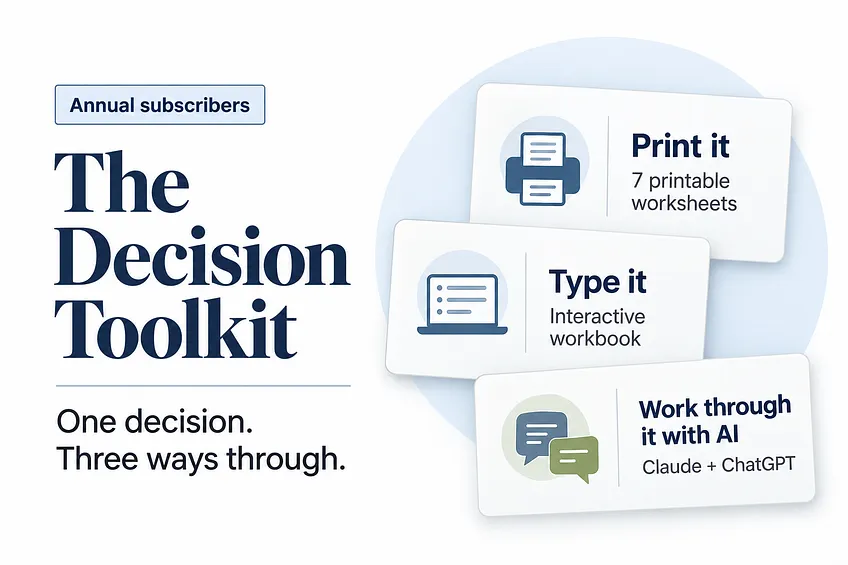
The Decision Toolkit
Decide what to change.
Keep what still fits.
Naming the mismatch gives you a better starting point. The next decision may be to adjust, replace, wait, or leave the situation unchanged.
The Decision Toolkit helps you compare those options against what matters to you. You leave with a Decision Brief: what you chose, why it fits, and what to do next.
Use it after you have something specific to decide. It does not diagnose the mismatch or force you to make a change.
Print it, type in the workbook, or work through it with your AI. Reuse it for your next decision.
You can start here, too
Not ready to name it?
Start with a little reading.
 A real example · Article
Something Is Off But I’m Not Walking Away.
A signal that something was wrong, a closer look at the evidence, and a reason not to tear everything down.
Read the article ↗Ready to look at your own example?
Return to the guided check ↑